New Field Manual Connects the Work of Starting Again with Responsible Use of AI
The Self-Sufficient Immigrant in the Age of AI connects practical rebuilding with privacy, verification, responsibility, and human judgment.
Media room
A practical press room for journalists, producers, event hosts, and institutions preparing coverage or a conversation.
Latest announcements
Read the complete releases online, download the publication-ready PDFs, and follow the related book and media links without searching across the site.
The Self-Sufficient Immigrant in the Age of AI connects practical rebuilding with privacy, verification, responsibility, and human judgment.
Lost Decency connects Afghanistan's political rupture with family memory, displacement, dignity, responsibility, and the search for home.
Author biographies
Each author has a one-sentence introduction, a brief biography, and a full biography. Copy the version you need, or download the complete media kit.

Introduction One sentence
Atta Arghandiwal is an Afghan American author, speaker, humanitarian, and mentor whose work connects memory, dignity, self-sufficiency, and responsible use of new tools.
Atta Arghandiwal is an Afghan American author, speaker, humanitarian, and mentor. After leaving Afghanistan and living as a refugee in Germany, he arrived in the United States in December 1981 with basic English and $10. He began as a bank teller and built a 29-year career in banking. His books and talks explore memory, dignity, responsibility, and the practical work of starting again.
Atta Arghandiwal is an Afghan American author, speaker, humanitarian, and mentor whose work is rooted in a life rebuilt across countries, languages, and institutions.
Born in Kabul, Atta served in the Afghan Air Force and worked in public relations and sales at the Hotel Inter-Continental in Kabul. He left Afghanistan in August 1980 after the political rupture that followed the 1978 coup and the Soviet invasion. After living as a refugee in Germany, he arrived in the United States in December 1981 with basic English and $10.
Atta began his American working life as a bank teller. Over the next 29 years, he built a career in banking and rose to Senior Vice President and Regional Manager. That experience—beginning again, learning unfamiliar systems, earning trust, supporting a family, and accepting responsibility—became part of the foundation for his writing and community work.
His books include Lost Decency: The Gilded Cages and the Search for Home and The Self-Sufficient Immigrant in the Age of AI: A Field Manual for the Work of Standing Again, co-authored with Sohrab Rasouli. Across memoir, public conversation, and practical guidance, Atta examines Afghanistan, exile, moral memory, work, family stability, self-sufficiency, and the dignity of rebuilding a life.
Today, Atta writes and speaks for readers, universities, libraries, cultural institutions, immigrant-serving organizations, and communities seeking a serious conversation about memory, responsibility, and human judgment in a changing world.
A fourth, approximately 100-word version is included in the downloadable media kit.

Introduction One sentence
Sohrab Rasouli is an Afghan immigrant, founder of Noura, co-author of The Self-Sufficient Immigrant in the Age of AI, and lead of the AI Self-Sufficiency Lab.
Sohrab Rasouli is an Afghan immigrant, AI product builder, founder of Noura, co-author of The Self-Sufficient Immigrant in the Age of AI, and lead of the AI Self-Sufficiency Lab. His work connects three things: his own experience of rebuilding, direct work inside employment services, and hands-on development of practical AI systems. After rebuilding through education and work, he supported refugees and newcomers directly through employment services. That experience showed him that capable people are often blocked not by a lack of ability, but by systems that cannot yet recognize their experience, evidence, or potential. He founded Noura to help workforce organizations and their frontline teams prepare, organize, and verify their work while keeping people in control.
Sohrab Rasouli is an Afghan immigrant, AI product builder, founder of Noura, co-author of The Self-Sufficient Immigrant in the Age of AI: A Field Manual for the Work of Standing Again, and lead of the AI Self-Sufficiency Lab. His work connects his own experience of rebuilding, direct work inside employment services, and hands-on development of practical AI systems.
His life has required more than one serious restart across countries, shaping his attention to what happens when a capable person enters a system that cannot yet recognize the whole person. In Afghanistan, he rebuilt through education, teaching, university work, and creating an academy. When he later had to begin again in the United States, he rebuilt through ordinary work before moving into direct employment support for refugees and newcomers.
That employment work made one problem impossible to ignore: people are often not short of ability; they are blocked by systems that cannot yet read their experience, evidence, or potential. Sohrab came to AI through this problem, not through hype. He began studying and building with the technology to see whether it could make complicated work more understandable and manageable without taking judgment away from the person or professional responsible for the decision.
He founded Noura to carry that principle into practical workforce systems. Noura is a supervised AI system being built for workforce organizations and their frontline teams. Its earliest lessons came from employment support, but its purpose is broader: helping workforce teams prepare, organize, research, draft, verify, and follow through on complex work while preserving evidence, professional judgment, and human responsibility. Sohrab also leads the AI Self-Sufficiency Lab, where participants learn to protect private information, give AI clear instructions, verify what it produces, and create useful work they understand and can take responsibility for.
A fourth, approximately 100-word version is included in the downloadable media kit.
Press downloads
Download an Atta Arghandiwal press portrait or the full-resolution cover of either current book. No request or sign-in is required.
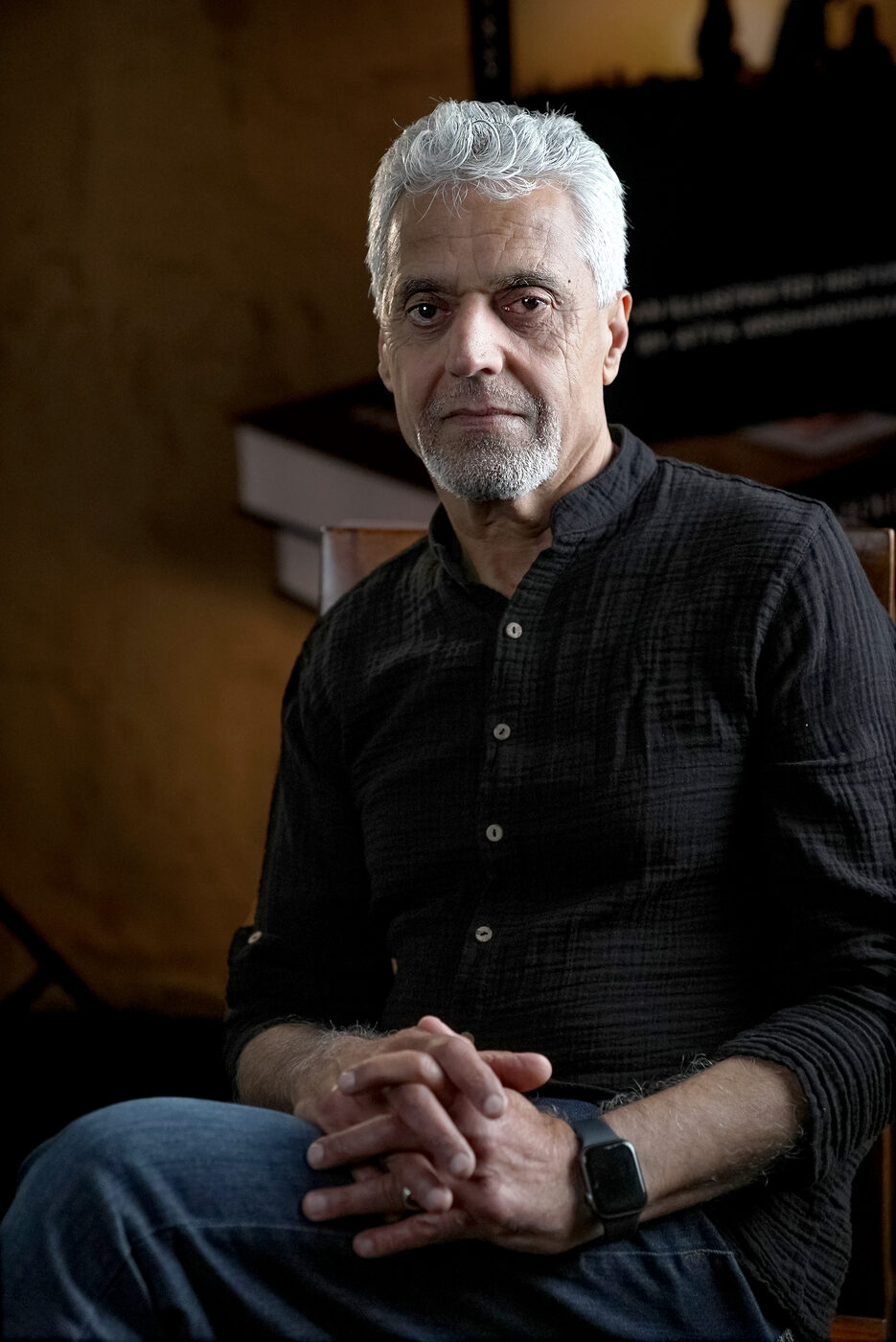
Photograph
Dark shirt, seated, warm low light. The default editorial portrait.
Photograph courtesy of Atta Arghandiwal. Free to use in coverage of the books or speaking appearances.
Download primary headshot
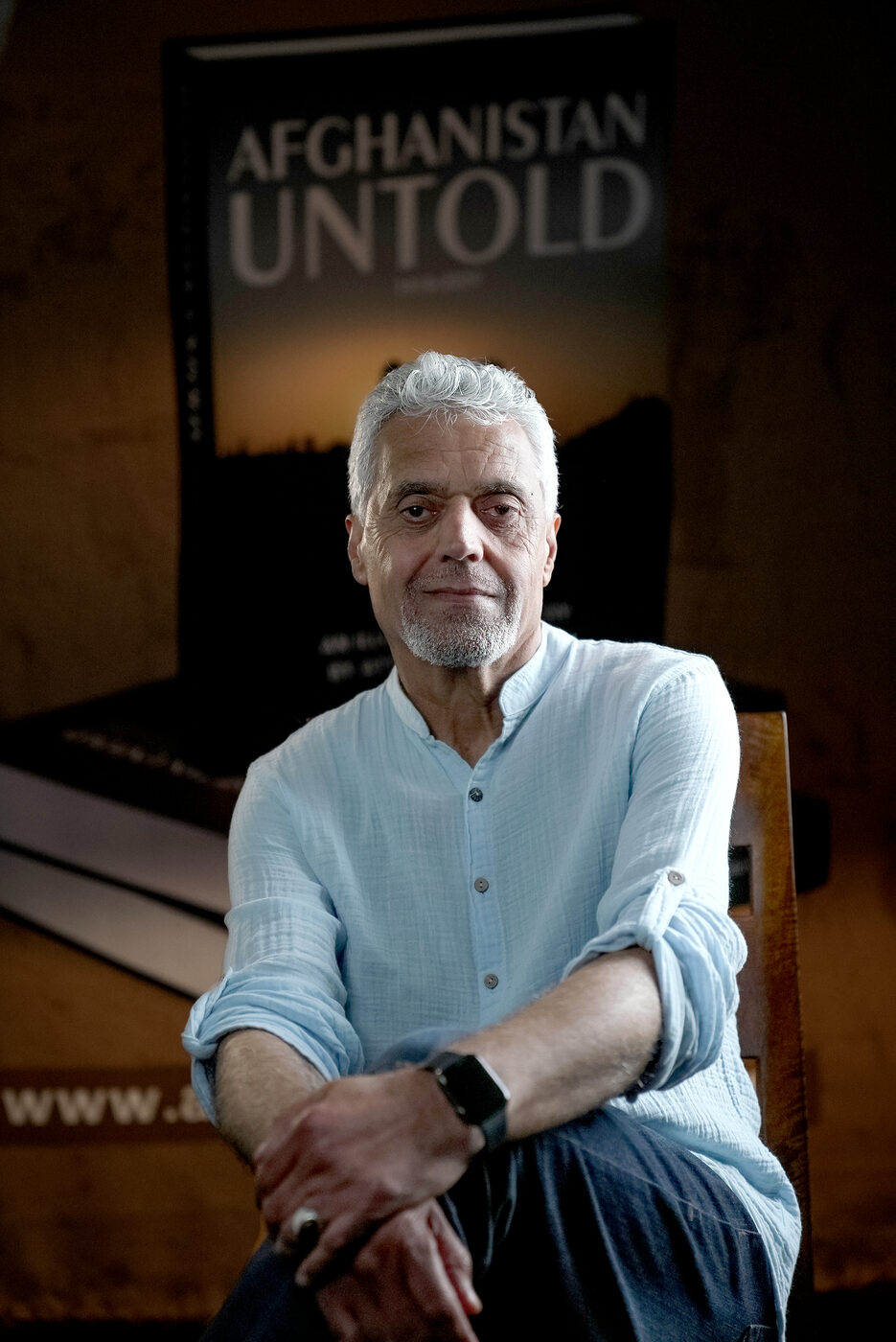
Photograph
Light shirt and an open posture, suited to community, library, and diaspora coverage.
Photograph courtesy of Atta Arghandiwal. Free to use in coverage of the books or speaking appearances.
Download alternate headshot
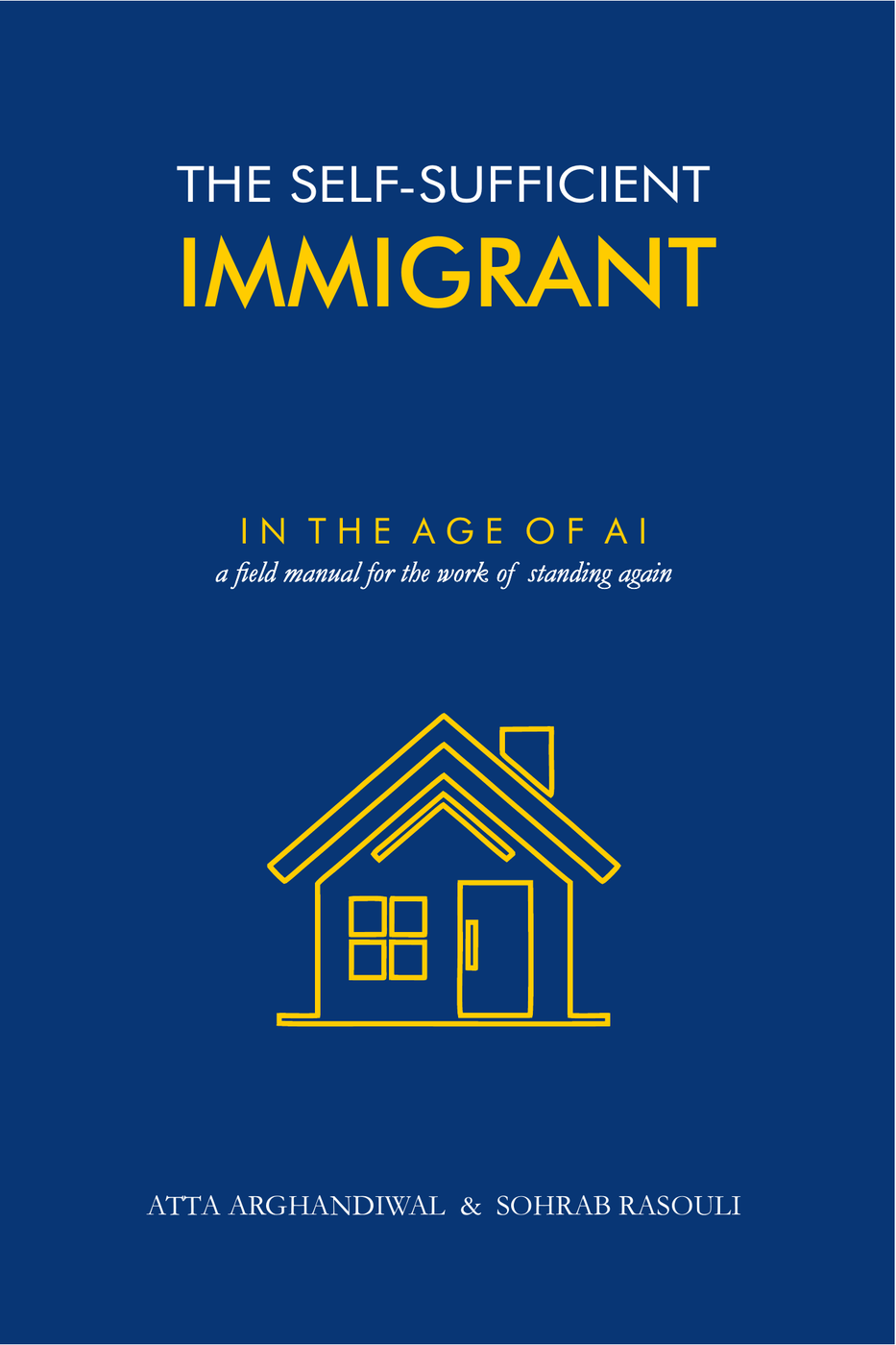
Book cover
Full-resolution cover for the current edition.
Download Age of AI cover
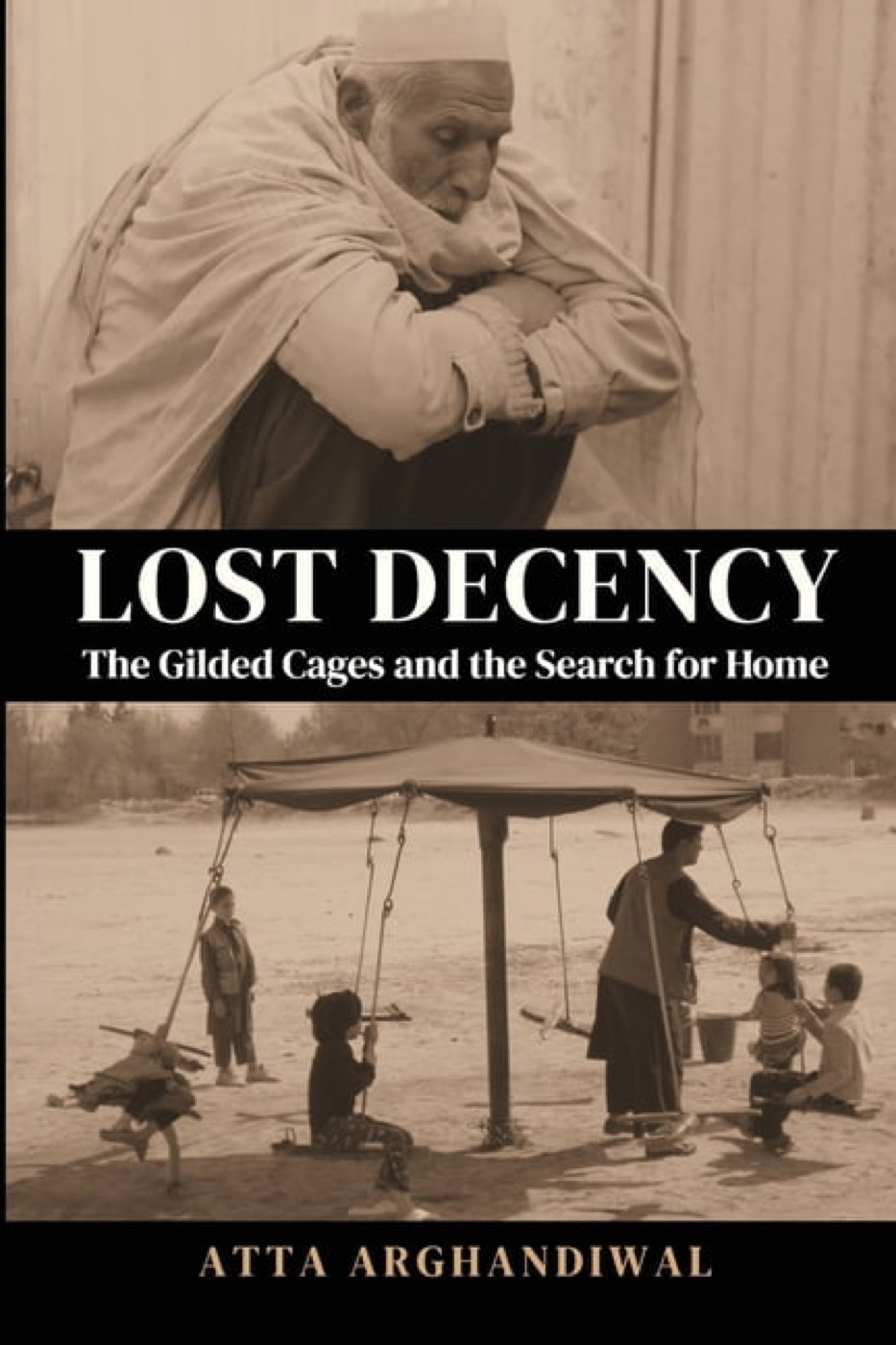
Book cover
Full-resolution cover for the current edition.
Download Lost Decency coverFamily and archival photographs elsewhere on the site are not offered for press use because their reuse permissions were not recorded.
Current books
A Field Manual for the Work of Standing Again
Atta Arghandiwal and Sohrab Rasouli
This practical field manual is written for immigrants, refugees, restarting families, and the people who serve beside them. It connects the work of building stability with the realities of an AI-shaped economy. AI is presented as a tool for preparation, comparison, drafting, translation, learning, and organization—not as an authority. The reader remains responsible for privacy, verification, consequential decisions, and the human meaning of the work.
Atta Arghandiwal
A work of memory, exile, and moral history, Lost Decency connects Afghanistan's political rupture with its human cost. Through family memory, displacement, and the search for home, Atta asks what people carry when a country changes around them—and what dignity and responsibility can preserve after familiar structures are gone.
A 2012 Foreword INDIES finalist in Autobiography & Memoir and a 2013 IBPA Benjamin Franklin Award finalist for the Bill Fisher Best First Book—Nonfiction.
Interview topics
These four subjects connect Atta's books, lived experience, and public work. Open the Speaking page for the full description, audience fit, and formats.
Know where AI helps and where a person remains in charge.
See political rupture through the experience of a family and a life.
Understand how responsibility and consistency build trust.
Distinguish survival from the longer work of stability.
Watch and listen
Preview Atta's speaking style and the subjects he has discussed in public. Each link opens the recording on the platform that published it.
Media kit
One accessible plain-text file with biographies for both authors, current book descriptions, interview topics, public appearance links, press asset addresses, and contact information.
What it contains
What it does not contain
Media request
Deadlines are the first thing Atta looks at, so they are the first thing this form asks about.
How this form worksThis static website does not receive or store what you type. The button below prepares your message for review. Your email app opens only if you then choose Open the prepared email. Nothing is sent automatically; it leaves only if you press Send in your email app.